Arbeitszeit in Dezimalstunden umrechnen: So klappt die Umrechnung ohne Kopfzerbrechen
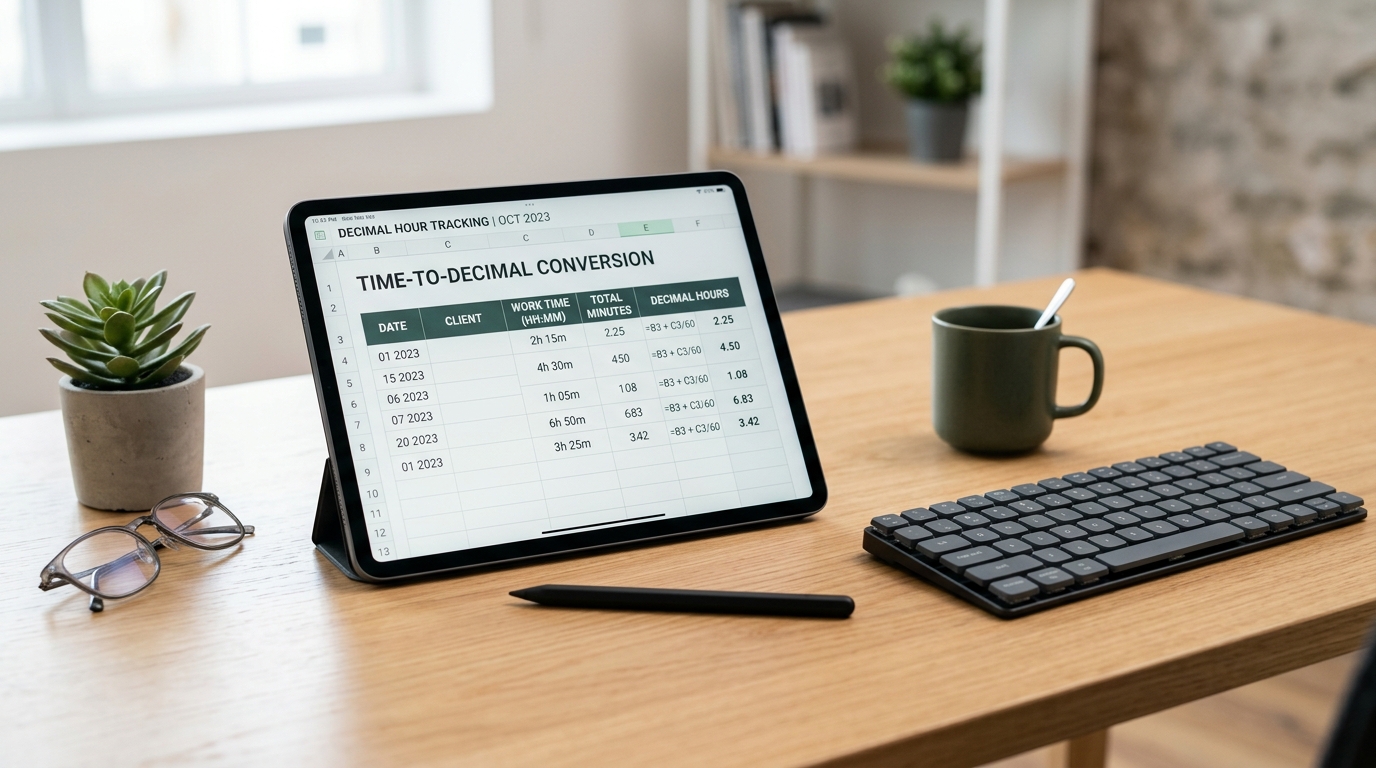
Ever stared at a timesheet showing “7.75 hours” and wondered what that even means in real minutes? You’re not alone. Payroll systems love decimal numbers, but our brains think in hours and minutes. Learning Arbeitszeit Dezimalstunden conversion once saves you from confusion every single pay period. This guide walks through the exact math, common mix-ups, and quick tricks for converting minutes into decimals and back again.
Was sind Dezimalstunden und warum werden sie verwendet?
Dezimalstunden express time as a single number instead of separate hours and minutes. Payroll software prefers this format because decimals are easier to add, multiply, and calculate wages from.
Instead of “1 hour 45 minutes,” a decimal system shows “1.75.” That single number plugs directly into a Stundenlohn formula without any extra conversion step needed during payroll processing.
Wie werden Minuten in Dezimalstunden umgerechnet?
The formula is simple: divide minutes by 60. Twenty minutes divided by sixty gives roughly 0.33. That’s your Minuten in Dezimalstunden result for that chunk of time.
Try another one. Forty minutes divided by sixty equals about 0.67. Add that to any whole hour, and you’ve got a clean decimal figure ready for Lohnabrechnung.
Warum entsprechen 30 Minuten genau 0,5 Stunden?
Thirty is exactly half of sixty, so the math works out perfectly clean here. That’s why 30 Minuten in Dezimalstunden always equals precisely 0.5, no rounding required.
This is the easiest conversion to memorize. Once you’ve got “half an hour equals point five” locked in, other conversions become much easier to estimate quickly in your head.
Wie rechnet man 15, 20, 45 oder 50 Minuten um?
Here’s a quick reference table covering the most common minute values people need to convert during daily timesheet entries.
| Minuten | Dezimalstunden |
|---|---|
| 15 Minuten | 0,25 |
| 20 Minuten | 0,33 |
| 30 Minuten | 0,50 |
| 45 Minuten | 0,75 |
| 50 Minuten | 0,83 |
Bookmark this table. It covers roughly 90 percent of real-world Arbeitszeit Umrechnung situations you’ll ever encounter.
Wie werden Dezimalstunden wieder in Stunden und Minuten zurückgerechnet?
Going backward means multiplying the decimal portion by 60. Take 0.75, multiply by 60, and you land on 45 minutes exactly.
So “1.75 hours” translates back to 1 hour and 45 minutes. This Dezimalstunden zurückrechnen trick works every time, regardless of how odd the original decimal number looks.
Warum ist 1,30 Stunden nicht gleich 1 Stunde 30 Minuten?
This mix-up trips up almost everyone at least once. “1.30” in decimal actually means 1 hour and only 18 minutes, since 0.30 times 60 equals 18, not 30.
The confusion happens because we’re used to reading numbers after a decimal point like clock minutes. But Dezimalzeit doesn’t work that way; it’s a fraction of sixty, not a direct minute count.
Wie werden Dezimalstunden in der Zeiterfassung verwendet?
Most digital Zeiterfassung Dezimalstunden systems log your clock-in and clock-out times, then automatically convert the difference into decimal format behind the scenes.
This automation removes manual math from your daily routine entirely. You just clock in and out normally, and the system handles every Arbeitsstunden Dezimalzahl calculation without you lifting a finger.
Wie hilft die Dezimaldarstellung bei der Lohnabrechnung?
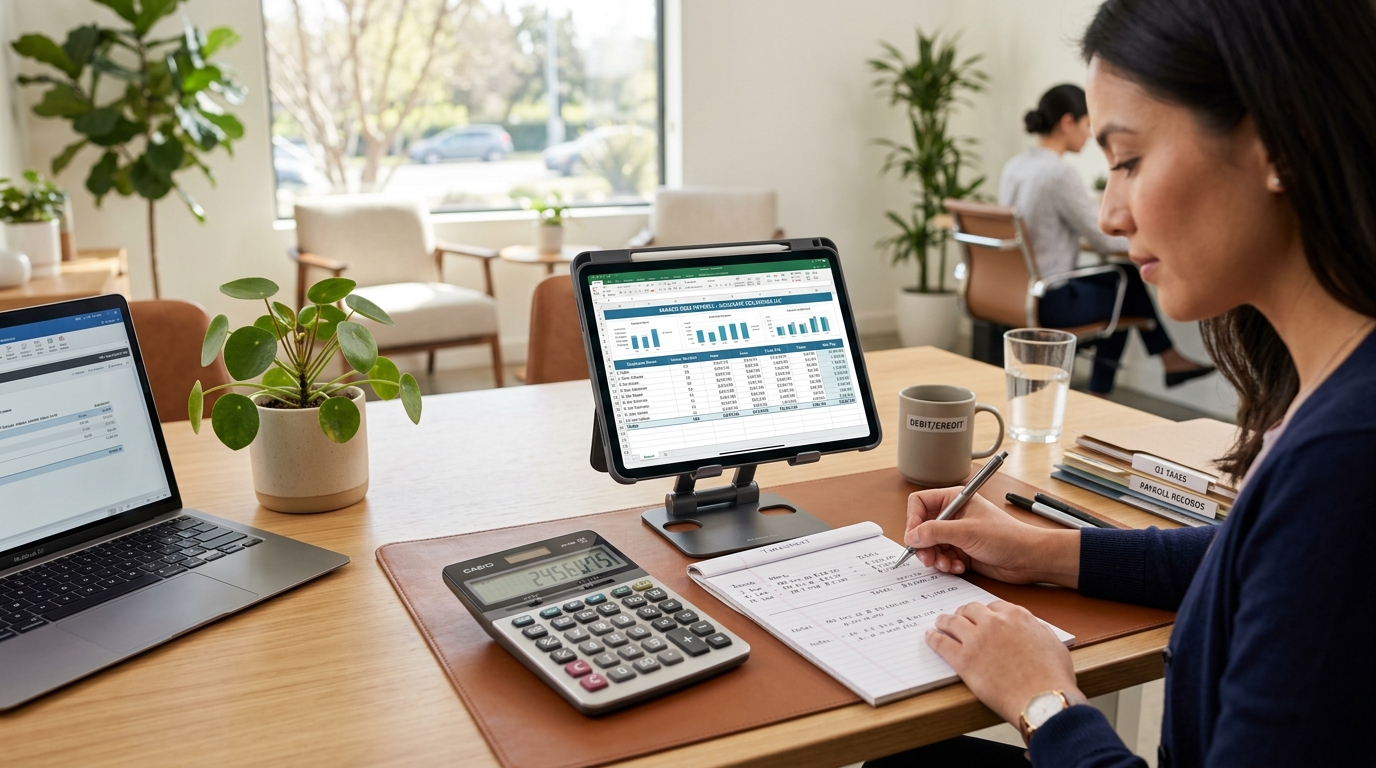
Payroll clerks love decimals because multiplication becomes instant. Multiply 7.5 hours by an hourly wage of 20 euros, and you immediately get 150 euros, no extra conversion steps needed.
Compare that to multiplying “7 hours 30 minutes” directly. It’s clunkier and invites more errors, which is exactly why Lohnabrechnung Dezimalstunden became the industry standard approach.
Welche Rundungsfehler können bei der Umrechnung entstehen?
Rounding causes small but real discrepancies over time. Twenty minutes technically equals 0.333 repeating, but most systems round to 0.33, shaving off a tiny fraction each time.
Across hundreds of entries, these tiny Rundungsfehler can add up to noticeable pay differences. Using more decimal places, like 0.333 instead of 0.33, minimizes this drift significantly.
Fazit: Dezimalstunden schnell und fehlerfrei umrechnen
Converting Arbeitszeit in Dezimalstunden boils down to one simple rule: divide minutes by sixty, always. Memorize the common values, watch out for the “1.30 isn’t 1 hour 30 minutes” trap, and you’ll handle payroll math confidently every time it comes up.
Quellen und Referenzen
- Entgeltfortzahlungsgesetz (EFZG) § 4
- Gewerbeordnung (GewO) § 108 (Abrechnung des Arbeitsentgelts)
