Arbeitszeit berechnen mit Pause: So rechnest du deine echten Arbeitsstunden richtig aus
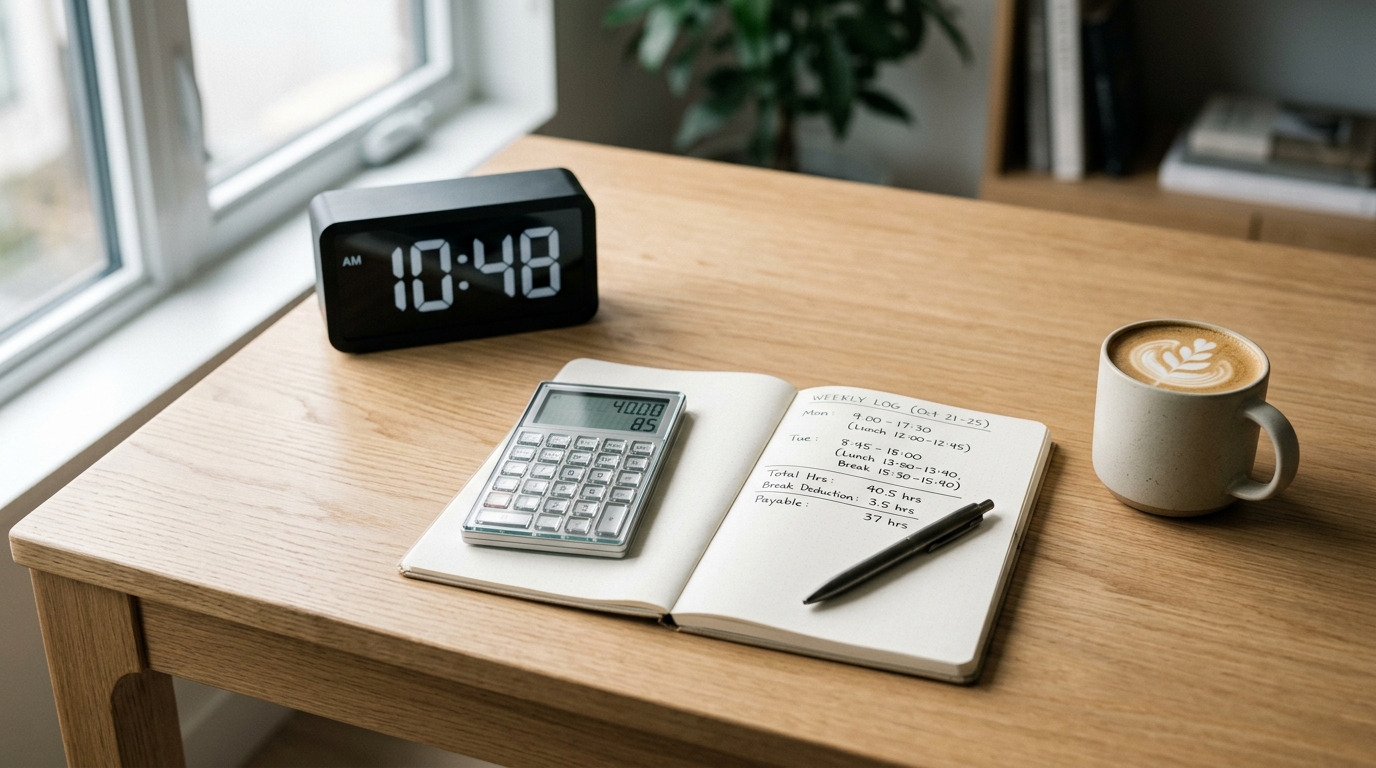
Ever finished a shift and had no clue how many hours you actually worked? Breaks make the math trickier than it looks. Getting Arbeitszeit berechnen mit Pause right matters for your paycheck and your sanity. This guide breaks down exactly how to subtract break time from your total hours, using clear steps and simple examples, so you never second-guess your numbers again.
Wie berechnet man die tägliche Arbeitszeit mit einer Pause?
Start with your total time on the clock, from Arbeitsbeginn to Arbeitsende. That’s your raw attendance window, not yet your real working time.
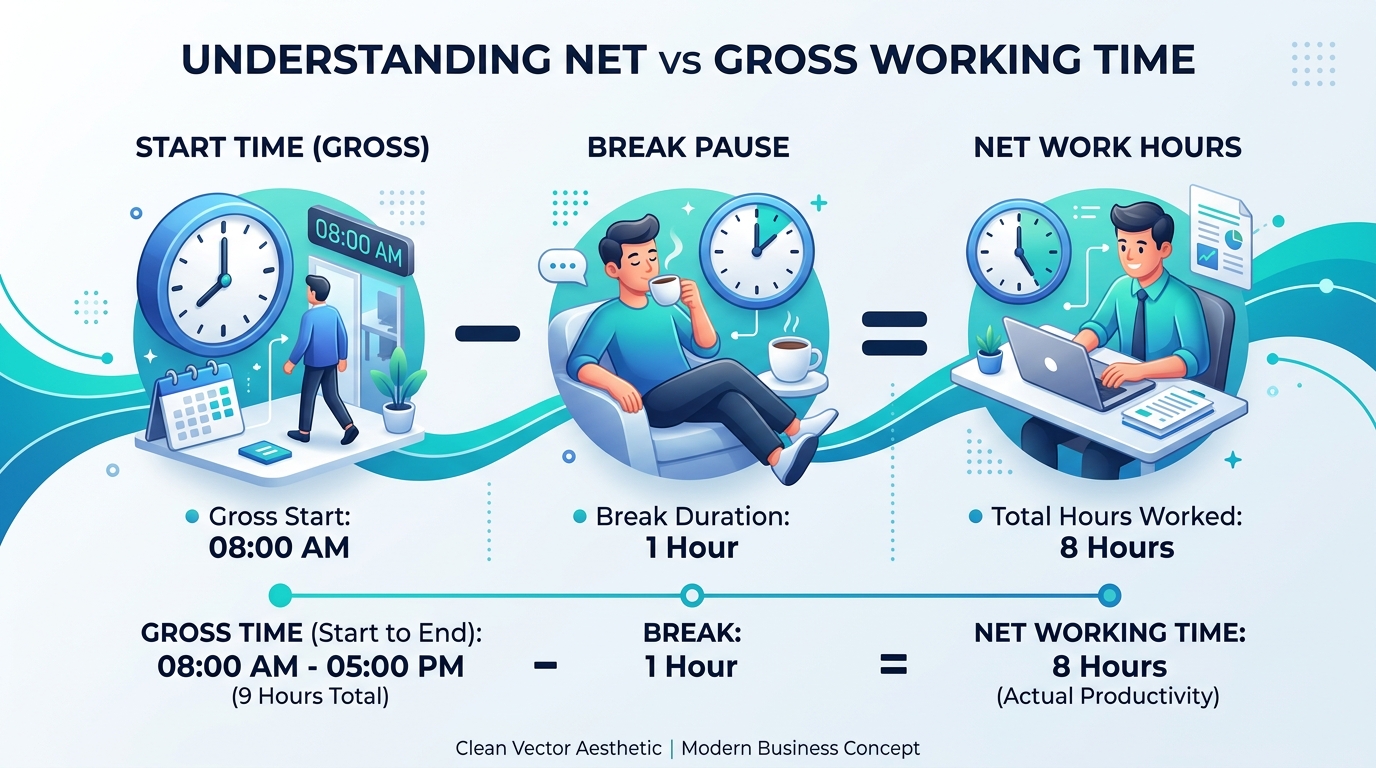
Next, subtract your break length. If you arrived at 8:00 and left at 17:00, that’s nine hours total. Take away a 30-minute lunch, and your Nettoarbeitszeit lands at 8.5 hours.
Wie wird die Pausenlänge vom Gesamtzeitraum abgezogen?
Subtracting Pausenzeit is basic arithmetic, but people mess it up constantly by forgetting to convert minutes properly. Thirty minutes equals half an hour, not “0.3” of an hour.
A clean formula helps: End time minus Start time minus Break time equals actual worked hours. Writing it this way avoids the mental gymnastics that often causes small, annoying errors.
Wie berechnet man Nettoarbeitszeit und Bruttoanwesenheit?
Bruttoarbeitszeit is everything, including breaks. Nettoarbeitszeit is what’s left after breaks disappear. Payroll almost always cares about the net figure, not the gross one.
Confusing the two causes real problems. An employee reporting nine “worked” hours when only 8.5 were actually net time creates a mismatch that HR eventually has to untangle.
Was passiert bei mehreren Pausen an einem Arbeitstag?
Long shifts often include more than one break. A 15-minute morning pause plus a 30-minute lunch adds up to 45 minutes total, all subtracted from your gross time.
| Pause | Dauer |
|---|---|
| Vormittagspause | 15 Minuten |
| Mittagspause | 30 Minuten |
| Nachmittagspause | 10 Minuten |
| Gesamt | 55 Minuten |
Add every break together first, then subtract the combined total once.
Wie funktioniert die Berechnung bei einer festen Arbeitszeit?
Fixed schedules make things easier. If your contract says 8:00 to 16:30 with a fixed 30-minute lunch, your Arbeitszeit mit Mittagspause stays predictable every single day.
This predictability helps with monthly planning too. Multiply your daily net hours by working days in the month, and you’ll get an accurate Arbeitszeitkonto estimate without surprises.
Wie berechnet man Arbeitszeit mit unterschiedlich langen Pausen?
Not every day looks the same. Maybe Monday’s lunch ran 45 minutes because of a doctor’s appointment, while Tuesday’s stayed at the usual 30.
Track each day’s actual break length separately rather than assuming a fixed number. Averaging breaks across a week only works if you’re tracking real, not estimated, Pausenlänge every day.
Wie lassen sich Pausen bei Schichtarbeit berücksichtigen?
Shift workers often deal with irregular break placement. A night shift might include a break at 2 a.m. instead of noon, but the subtraction logic stays identical.
Whatever the shift pattern, always separate Arbeitszeit from break time in your notes. Lump-sum guessing at the end of a shift almost always produces a slightly wrong total.
Wie wird Arbeitszeit mit Start- und Endzeit berechnet?
Here’s a full worked example. Start: 07:45. End: 16:15. Break: 30 minutes.
Total attendance equals 8 hours and 30 minutes. Subtract the break, and your real Arbeitsdauer berechnen result lands at exactly 8 hours worked, ready for payroll.
Welche Fehler entstehen beim manuellen Abziehen von Pausen?
Manual math invites mistakes, especially with odd numbers like 37 or 52 minutes. People frequently round incorrectly or forget to subtract a second short break entirely.
Double-checking with a calculator, or better yet, an online Arbeitszeitrechner mit Pause, catches these small errors before they snowball into a wrong weekly total.
Fazit: Arbeitszeit mit Pausen schnell und korrekt berechnen
Getting Arbeitszeit berechnen mit Pause right just takes a consistent formula: total time minus every break equals real worked hours. Track breaks accurately, avoid rounding shortcuts, and double-check messy numbers. A few extra seconds of care saves you from payroll headaches down the road.
Quellen und Referenzen
- Deutsches Arbeitszeitgesetz (ArbZG) § 4 (Ruhepausen)
- Bundesarbeitsgericht, Urteil vom 16.12.2009 – 5 AZR 157/09
