Was zählt als Nachweis vor Gericht? Lehren aus dem Fall vor dem Arbeitsgericht Emden
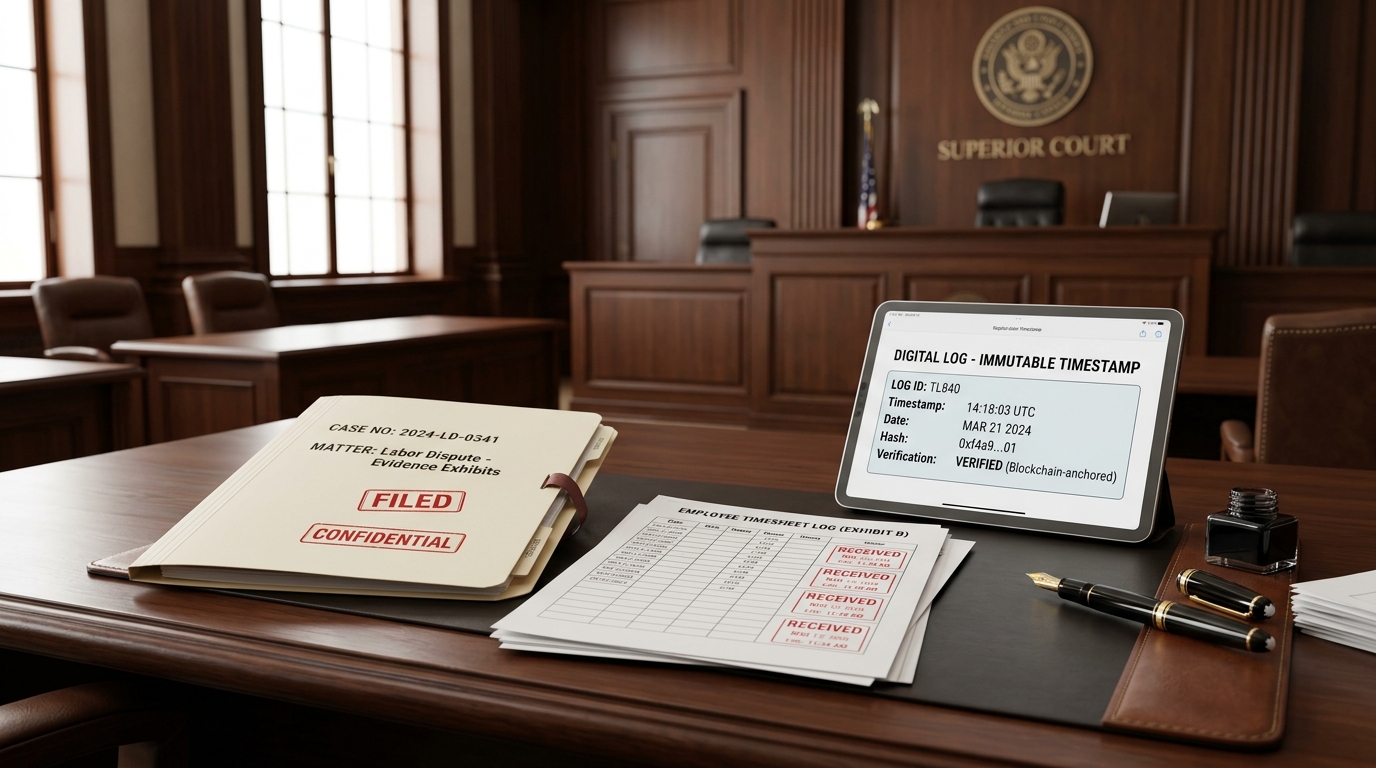
A single court case can reshape how thousands of employees think about proving their hours. The decision from the Arbeitsgericht Emden became widely discussed precisely because it touched on a question everyone eventually asks: what actually counts as proof? This article unpacks the case, what it means for evidence standards, and what lessons workers should take away for their own Arbeitszeitdokumentation habits.
Was geschah im Verfahren vor dem Arbeitsgericht Emden?
The case centered on an employee claiming unpaid overtime, based partly on records kept through a time-tracking system used at the workplace. The Arbeitsgericht Emden had to weigh how much that data actually proved.
The court’s reasoning drew significant attention because it touched directly on the broader debate around mandatory Arbeitszeiterfassung following the earlier EuGH and BAG rulings on employer obligations.
Welche Bedeutung hatte die Arbeitszeitdokumentation im Fall?
Documentation sat at the very center of the dispute. Without a functioning Zeiterfassungssystem, proving exactly when work started and ended becomes a matter of interpretation rather than fact.
The case highlighted a recurring theme in German labor law: recorded time carries real weight, but the format, consistency, and reliability of that record all influence how much a court ultimately trusts it.
Welche Beweismittel können bei Überstunden relevant sein?
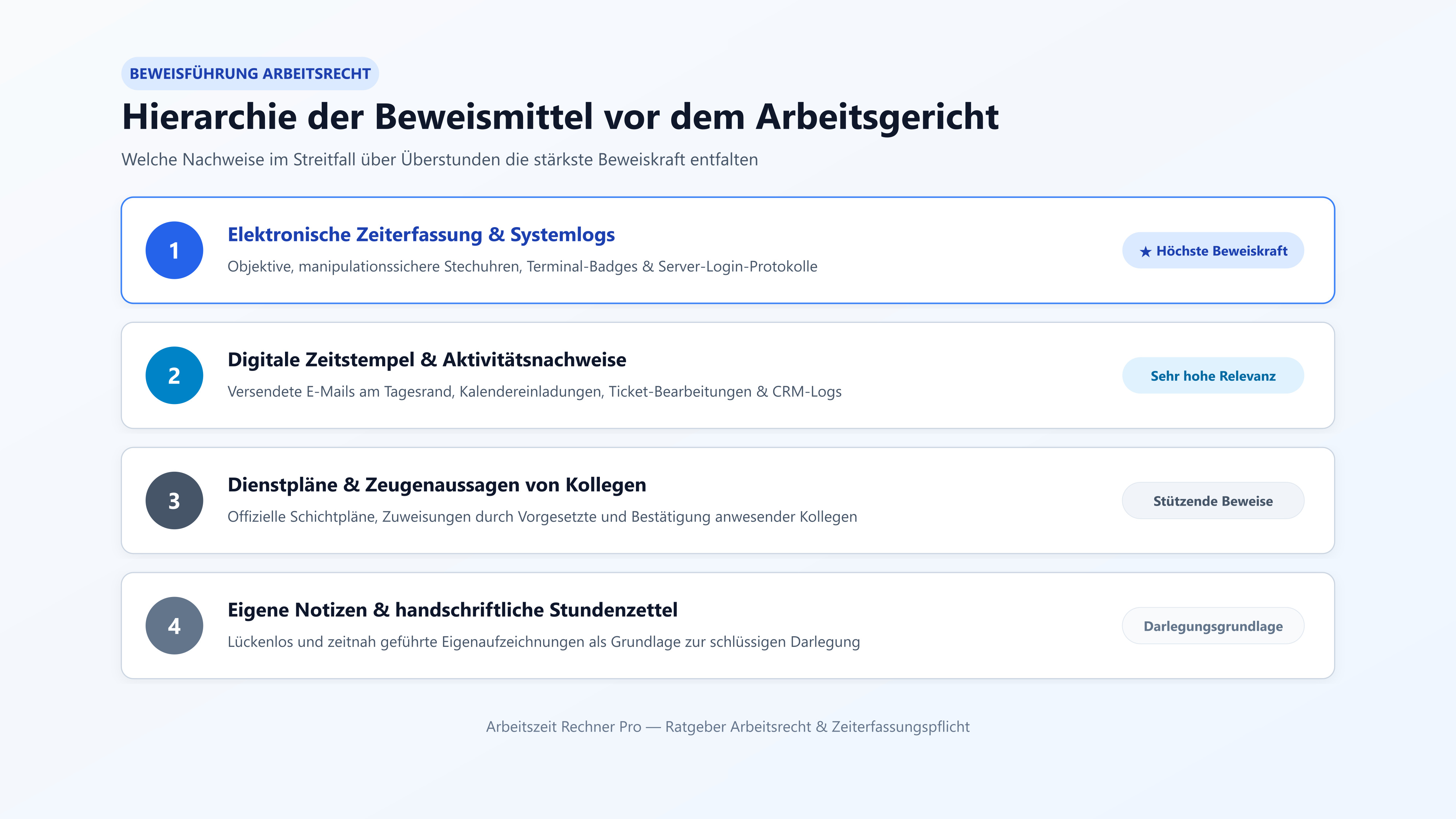
Beyond formal time-tracking software, several other sources can support an overtime claim. Courts often look at a combination of evidence rather than a single document alone.
| Beweismittel | Nutzen |
|---|---|
| Zeiterfassungssystem | Direkter Stundennachweis |
| E-Mail-Zeitstempel | Bestätigt Anwesenheit |
| Zeugenaussagen | Unterstützt Arbeitszeitangaben |
| Dienstpläne | Zeigt geplante Arbeitszeiten |
Warum unterscheiden sich Arbeitszeitaufzeichnung und gerichtlicher Beweis?
Keeping a log is one thing. Convincing a judge it’s accurate and complete is another entirely. Arbeitszeit Beweismittel must hold up under scrutiny, not just exist somewhere on paper.
This gap between personal record-keeping and formal legal proof is exactly why cases like the one from Emden generate so much discussion among labor law specialists and employees alike.
Welche Rolle spielen eigene Aufzeichnungen von Arbeitnehmern?
Self-kept notes aren’t automatically dismissed, but courts generally view them as supporting evidence rather than standalone proof. Combined with other sources, though, they strengthen a case considerably.
An employee’s own Arbeitszeitprotokoll, kept consistently over months, often carries real persuasive value, especially when it lines up with independent details like emails or witness accounts.
Wie können Arbeitgeber und Arbeitnehmer Arbeitszeitangaben bestreiten?
Disputes often boil down to conflicting claims. An employer might argue recorded hours were inflated, while the employee insists the numbers reflect real time worked.
This is where Darlegung Überstunden, meaning the burden of clearly presenting your case with specifics, becomes critical. Vague claims rarely hold up against a well-organized counterargument.
Was lässt sich aus dem Fall für die tägliche Dokumentation ableiten?
The clearest takeaway is consistency. Sporadic notes scattered across scraps of paper carry far less weight than a steady, dated Arbeitszeitprotokoll Gericht-ready format kept every single day.
Employees should treat their daily documentation as if a judge might read it someday. That mindset alone tends to produce cleaner, more reliable, and ultimately more persuasive records.
Welche Fragen zur Darlegung und Beweisführung bleiben wichtig?
Legal standards around Beweisführung Arbeitszeit continue evolving, particularly as more employers roll out formal tracking systems following the EuGH and BAG rulings discussed elsewhere.
Questions remain about how much weight self-reported data deserves versus employer-verified systems, and this gray area is likely to keep generating new court decisions for years to come.
Warum sollte der konkrete Einzelfall juristisch betrachtet werden?
Every dispute has unique facts. What worked as sufficient proof in the Emden case might not apply directly to a different workplace with different tracking practices or contractual terms.
Anyone facing a real overtime dispute should treat general guides like this one as background context, then consult an employment lawyer for advice matched to their specific Arbeitsrecht Urteil situation.
Fazit: Was der Emden-Fall über Arbeitszeitnachweise zeigt
The Arbeitsgericht Emden case reinforces one lasting lesson: documentation quality matters enormously in overtime disputes. Consistent, detailed records, backed by independent evidence like emails or schedules, give employees a genuinely stronger position if a disagreement over hours ever reaches a courtroom.
Quellen und Referenzen
- Arbeitsgericht Emden, Urteil vom 20.02.2020 – 2 Ca 94/19
- BAG Urteil vom 04.05.2022 – 5 AZR 359/21
- Landesarbeitsgericht Niedersachsen, Urteil vom 06.05.2021 – 5 Sa 1292/20
