Vertrauensarbeitszeit ohne Zeiterfassung: Warum du trotzdem selbst mitschreiben solltest
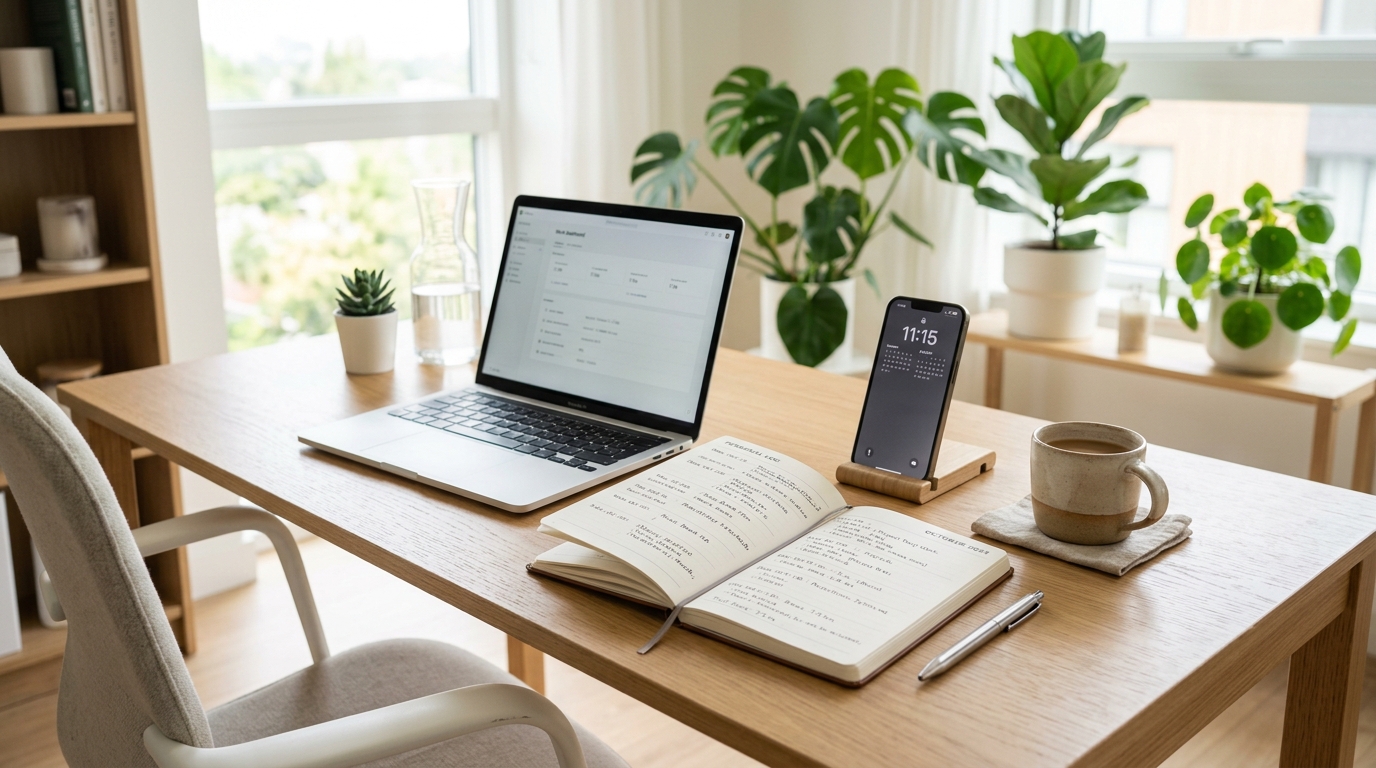
Imagine a job with no punch clock and no login system — just trust that you’ll get your work done. That’s Vertrauensarbeitszeit in a nutshell. It sounds relaxing, but here’s the catch. When nobody tracks your hours, nobody can prove them either. Even under a trust-based setup, keeping your own Arbeitszeitaufzeichnung protects you if disputes ever come up over pay or burnout. This guide covers why Arbeitszeit selbst erfassen makes sense, what to log daily, and how a simple Stundenzettel becomes your best friend at work.
Was bedeutet Vertrauensarbeitszeit ohne klassische Zeiterfassung?
Vertrauensarbeitszeit means your employer trusts you to manage your own schedule. There’s no clock-in machine watching your every move. You get judged on results, not hours logged at a desk.
But legally, “no clock” doesn’t mean “no record.” Courts still expect some form of Arbeitszeit dokumentieren, even in trust-based models. Your employer may skip active monitoring, but the underlying duty to track hours somehow hasn’t disappeared.
Warum Selbstaufzeichnungen bei Vertrauensarbeitszeit sinnvoll sein können
Self-tracking matters most when disputes arise. Without your own eigene Zeiterfassung, you’re stuck relying on memory during a pay disagreement, and memory fades fast.
Think of it like keeping a receipt after a purchase. Nobody needs it until something goes wrong. Then suddenly, that little piece of paper is worth its weight in gold. Your Arbeitszeitnachweis works the same way.
Welche Angaben solltest du täglich notieren?
A handful of details make your daily notes actually useful later. Skipping any of them weakens your record if you ever need to show it to HR or a court.
| Angabe | Warum wichtig |
|---|---|
| Arbeitsbeginn | Beweist den tatsächlichen Startzeitpunkt |
| Arbeitsende | Zeigt Gesamtdauer des Arbeitstages |
| Pausen | Trennt bezahlte von unbezahlter Zeit |
| Überstunden | Sichert Anspruch auf Vergütung |
| Besondere Vorkommnisse | Erklärt Abweichungen vom Normalfall |
Keep it simple. A five-line daily entry beats an empty page every single time.
Wie lassen sich Arbeitsbeginn und Arbeitsende zuverlässig dokumentieren?
Your phone is probably the easiest tool here. A quick timestamped note, text message to yourself, or calendar entry marks Arbeitsbeginn dokumentieren and Arbeitsende dokumentieren without extra effort.
Email timestamps help too. Your first sent message of the day and your last one often line up closely with your actual working hours, giving you a backup source if your notes ever get questioned.
Warum solltest du auch Pausen und Überstunden festhalten?
Breaks matter legally, not just for comfort. Failing to log them makes your total hours look inflated or inaccurate, which can backfire later.
Überstunden dokumentieren is arguably even more important. Unpaid extra hours vanish into thin air without a written trail. If you regularly work late, a simple line noting the extra time turns invisible effort into provable Vertrauensarbeitszeit Überstunden.
Wie kann ein einfacher Stundenzettel als persönlicher Nachweis dienen?
A basic Stundenzettel doesn’t need fancy software. A notebook, a spreadsheet, or even a phone notes app works fine, as long as you update it consistently.
Consistency is the real secret. A perfect log for one week followed by three blank months looks suspicious. Daily habit beats occasional bursts of diligence every time.
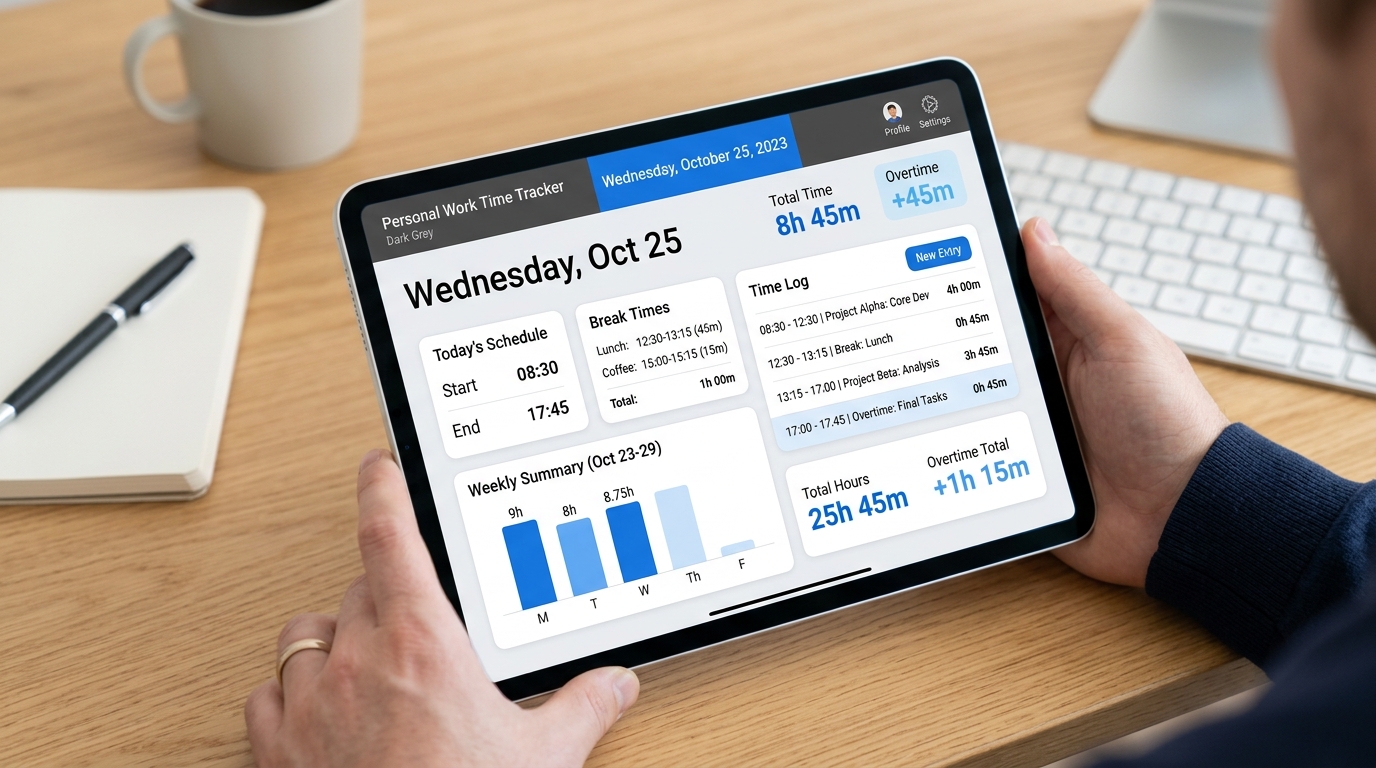
Welche Vorteile bietet eine digitale Dokumentation?
Digitale Zeiterfassung adds automatic timestamps, cloud backups, and easy searching. If your laptop dies, your records survive somewhere safe.
Apps also reduce human error. Typing “9:03” manually is fine, but an app logging the exact second removes any doubt about accuracy, which strengthens your persönliche Zeiterfassung if questioned later.
Wie schützt eine eigene Aufzeichnung vor späteren Unstimmigkeiten?
Picture this scenario: your manager claims you only worked six hours on a day you know ran nine. Without proof, it’s your word against theirs.
With a dated, detailed Arbeitszeitprotokoll, that argument mostly disappears. Written records, kept consistently over time, carry far more weight than a heated conversation months after the fact.
Wie lange solltest du deine persönlichen Arbeitszeitaufzeichnungen aufbewahren?
A reasonable habit is holding onto your records for at least two to three years. Wage claims and disputes sometimes surface long after the actual work happened.
Store both digital and printed backups if possible. Losing your only copy right when you need it defeats the whole purpose of building a private Arbeitszeit dokumentation Arbeitnehmer system in the first place.
Fazit: Warum eigene Arbeitszeitaufzeichnungen nützlich sein können
Vertrauensarbeitszeit gives you freedom, but freedom without records is risky. Keeping your own simple Arbeitszeitnachweis costs a few minutes daily and pays off enormously if disputes ever land on your desk. Start small, stay consistent, and you’ll always have proof when it counts.
Quellen und Referenzen
- BAG Beschluss vom 13.09.2022 – 1 ABR 22/21
- Arbeitszeitgesetz (ArbZG) § 16 Abs. 2
